Teleoperation Exoskeleton

Teleoperation Suit for a Container-Unloading Robot

Top View

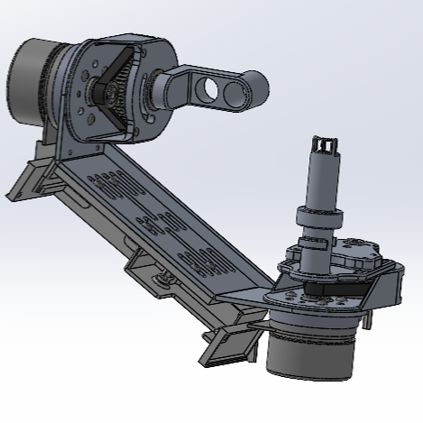
Carpal (Wrist) Joint Iteration 1

Top View

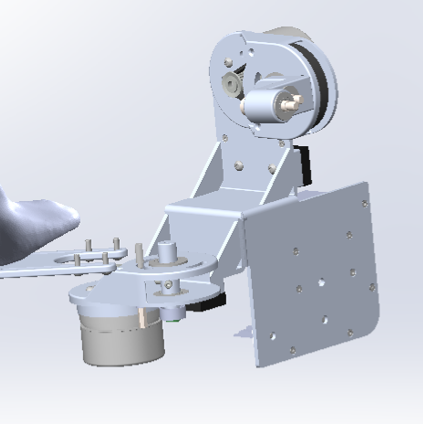
Carpal (Wrist) Joint Iteration 2

The goal of this project was to iterate upon an already existing Teleoperation Suit that controlled a container unloading robot. The project lasted only a month before being shelved, therefore although parts were quoted, they were never manufactured or tested.

Design (Shelved)

Top View

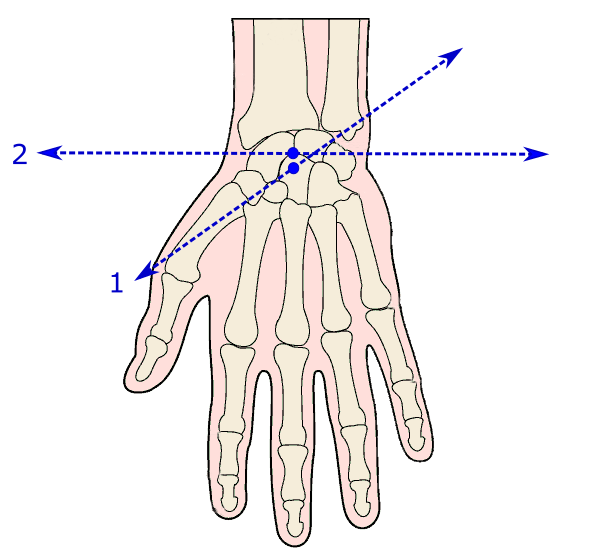
Lines along which the Center-of-Rotation of the Wrist translates
Top View

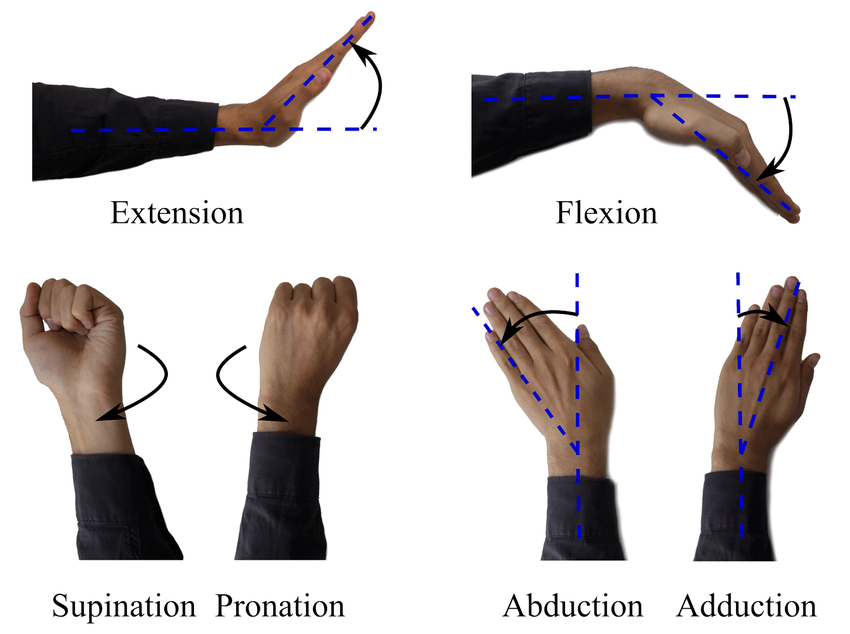
Wrist Modes of Freedom

The initial iteration of this Exoskeleton suit was completed rapidly, leaving a large amount of room for optimization.

There were two primary goals for this iteration:
  • Ensure that the suit's rotational axes and range of motion were aligned with the operator's, permitting full ROM with minimal discomfort
  • Optimize by minimizing assembly mass, cost, and part count
Aligning the rotational axes of the suit with the operator's required a minor redesign of the carpal joint. The joint initially treated the wrist as a fixed ball joint, with one point as the center of rotation for both Flexion and Abduction/Adduction.

As shown in the images above, at any given moment, the Instantaneous center of rotation for Abduction/Adduction (hereby referred to as Deviation) is anywhere along the "1" line and the Instantaneous center of rotation for the Flexion motion is anywhere along the "2" line depending on orientation.

The orientation of the operator's arm in the suit accomodated the Flexion CoR translation as it was along one of the suit's rotational axes. To accomodate the deviation translation, the joystick mount is allowed to slide "away" from the user.

To minimize BOM size, parts that were fastened together were replaced with snaps, which gave the added benefit of easy serviceability. Additionally, to minimize part mass, non-structural steel parts were replaced with plastic and structural-steel parts were pocketed after FEA in Solidworks Simulation.

This project was shelved after the unloading robot's autonomy increased significantly, thereby rendering this project obsolete.